
In the AI era, improving how you work isn’t about faster slides
McKinsey has started shifting from static documents to a living web hub. What the reporting reveals about the real change — and a practical way to bring it into your own company with Lovable.
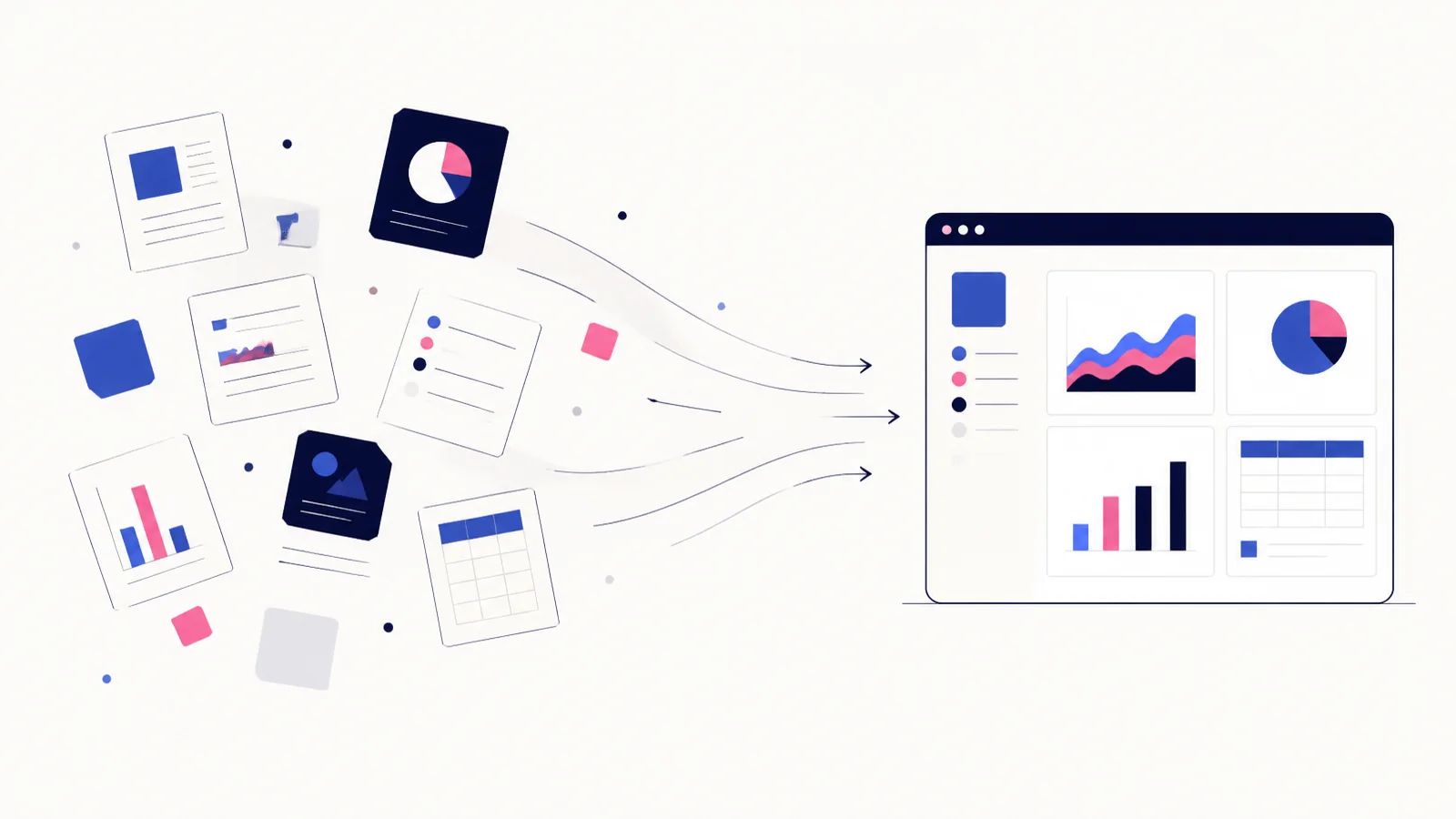
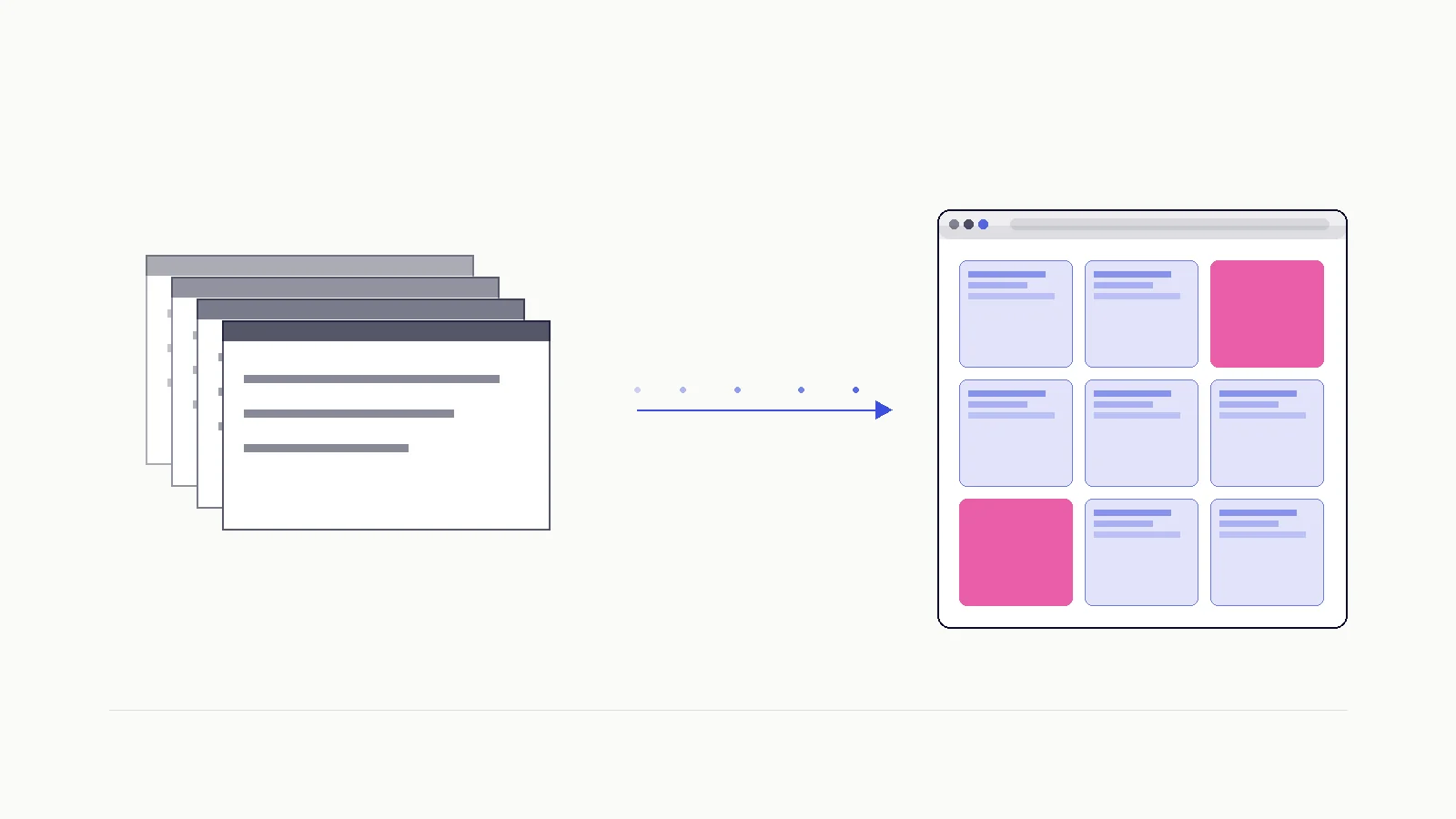
Most companies adopting generative AI start by thinking, “I want to make PowerPoint faster,” or “I want AI to write my Excel.” That isn’t wrong. But the reporting points one step further along: McKinsey, an emblem of the consulting industry, has started moving the center of its work from static documents to a living web hub.
What the reporting reveals
In June 2026, Business Insider reported that McKinsey consultants are using AI to reduce their reliance on PowerPoint (reported source). Senior Partner Kate Smaje said PowerPoint use has fallen sharply over the past few months. The key point is that PowerPoint has not disappeared. It remains as one form of final deliverable while ceasing to be the place where the daily work happens — a shift in position, not an extinction.
The same report describes Partner Louis-Charles Généreux building an AI-assisted site he calls a “client visualization hub” for a large North American cable company. On a project involving around 70 people, the latest updates, analysis, charts, and documents were consolidated into a single web hub, so everyone involved could reach the same searchable source. AI is used to update the site itself, and there is reportedly a mechanism that generates weekly, podcast-style summaries and notes. The delivery stack is Platform McKinsey and Cloudflare, with access limited through McKinsey credentials.
One honest caveat. What can be confirmed on McKinsey’s official pages (official source) goes as far as positioning QuantumBlack as “AI by McKinsey,” supporting the experimentation, testing, adoption, and scaling of generative AI. The specific “client visualization hub” case Business Insider reported cannot itself be confirmed on the official pages at this time. This article treats that reported primary source as an entry point — as material for thinking about the direction of the industry as a whole.
The real change is not “faster slides” — it’s “work on the web”

PowerPoint, Excel, Notion, Slack, email, Google Drive. In many organizations, business information is scattered across these. Each is a fine tool, but when combined, structural limits appear in searchability, updatability, access control, and version control. Who holds the latest version? What can we safely share with an outside vendor? Do the minutes, the proposal, and the dashboard numbers really rest on the same assumptions? The cost of checking these every week is far from trivial.
Turning work into a web hub — consolidating business information into a single web app — solves these as a matter of structure. Put the latest updates, analysis, materials, minutes, dashboards, and AI summaries in one place, and everyone looks at the same source. It is searchable, update times are recorded, visibility is controlled by permissions, and it connects to other systems through an API. A single source of truth comes to exist for that work.
A common misreading here: this is not a call to build one giant company-wide portal. Realistically, you stand up small web hubs — per project, per engagement, per client — in a short time as needed, and fold them away once they have served their purpose. The McKinsey case, too, was built for a single large client engagement.
The shape of a business web app you can prototype quickly with Lovable
Lovable is a way to prototype and improve a web app that fits your work in a short time. Shapes like these, for instance, can realistically be stood up quickly:
- A project visualization hub (progress, deliverables, stakeholders, and dashboards in one place)
- A client portal (share engagement status, materials, and billing with the client)
- Operational tools for sales, CS, or hiring (filling the gaps where off-the-shelf SaaS doesn’t fit)
- A management dashboard (numbers from several systems on a single screen)
- An internal knowledge base (permissioned, searchable knowledge in one place)
- A business app with AI summarization, AI search, and AI report generation built in
- A business MVP (build something that works and validate it before committing to operations)
To be fair, Lovable is not a cure-all. Complex enterprise integration, extremely heavy computation, or lifting years of bespoke business logic wholesale — these are not solved by a tool alone; they call for judgment about design, integration, and operations. Put another way: for “shape the web hub that becomes the center of the work as fast as possible, then refine it while running it,” it is one of the most effective options available today.
What Nihonbashi AI Lab can help with
Our role is not “making screens.” It is using AI-driven development tools — Lovable among them — to support the web app that becomes the center of the work, from design through operations. Concretely, we engage along four axes:
- Business design: sorting out what should become a web hub, and which work to start from
- Data structure and access design: who should see what, built so it can change later
- AI use design: building summarization, search, classification, and report generation into a form the front line can actually use
- Operations: the post-launch improvement cycle, internal adoption, and team enablement
We bring the implementation experience — integration with Supabase, Stripe, authentication, and external APIs, and the design of observability and billing — to take a web app from “a working prototype” to “production that carries the work.”
Can you build your own “client visualization hub”?
The McKinsey case uses no special technology. It consolidates business information into a web hub, strengthens it with AI summarization and search, and limits stakeholders through authentication. The same idea applies to any organization at a different scale. What makes the difference is not the tool — it is the judgment about what to turn into a web hub, and the setup to carry it through to operations.
Could part of the work you run on PowerPoint and Excel be turned into a web app, so everyone involved sees the same information? Bring that to us as a single question.
Let’s talk about how AI could fit your own operations
Contact usSources
- Reported sourceMcKinsey consultants are using AI to end their dependence on PowerPointBusiness Insider · Published 2026.06.10 · Fetched 2026.06.21
- Secondary coverageMcKinsey Staff Are Replacing an Essential Part of Work with AIEntrepreneur · Published 2026.06.11 · Fetched 2026.06.21
- Official sourceGenerative AI — Artificial Intelligence (QuantumBlack)McKinsey & Company · Fetched 2026.06.21
This article takes reported primary sources as an entry point and organizes industry trends alongside the perspective of Nihonbashi AI Lab. For the details of specific cases mentioned in reporting, please refer to the original sources.